When it comes to campfire cooking, there are few delicacies more iconic than the s’more.
Typically made with graham crackers, chocolate and marshmallows, the classic treat first officially appeared in cookbooks nearly a century ago and made for a simple, sweet, fire pit-friendly dessert.
Looking for a s’more with s’more pizzazz? Try these recipes at your next Getaway!
Salted Caramel S’mores
Caramel Sauce
Flaky Sea Salt
Graham Crackers
Marshmallows
Roast your marshmallow to your preference. Lay your toasted mallow on one graham cracker. Drizzle with caramel sauce and sprinkle with sea salt. Sandwich your s’more and enjoy!
Peanut Butter Cup S’mores
Peanut Butter Cups
Graham Crackers
Marshmallows
Roast your marshmallow to your preference. Lay your toasted mallow on one graham cracker. Carefully place a peanut butter cup directly onto the hot marshmallow. Sandwich your s’more and enjoy!
Banana Boat S’mores
Bananas
Chocolate Chips
Graham Crackers
Marshmallows
Start by peeling one panel of each banana peel off and removing most of each banana with a spoon – you should be left with mostly empty banana peel “boats” that can sit upright on their own. Fill each banana peel boat with marshmallows, chocolate chips and graham cracker pieces. Group the filled banana boats into a large piece of aluminum foil. Place the foil with the boats onto the fire pit grate for a minute or two until marshmallows are toasted and chocolate is melted. Grab a spoon and enjoy!
We know that furry friends can be the best travel companions around. While Getaway is pup-friendly, not everyone else is, so knowing how to pack for travel with your dog is especially important.
We’ve put together some tips and guidelines to make getting away with your pup a breeze. Most transportation options require a carrying case for your dog. We like a dog carrier, like this Frisco premium travel carrier, for more portable travel or a dog car seat for driving.
Tip #1: Traveling By Local Transit
Local transportation is typically the most affordable option for humans and dogs alike. Before you hop on your local bus or train though, make sure to check the travel rules for pets in your local area. Luckily enough, we’ve put together a guide for all of our cities.
In both New York and D.C., service dogs are always allowed on local transit. Non-service dogs are also allowed, but only if they’re in a container or carrier. Atlanta’s MARTA is similar, but with an extra restriction that requires the carrier to be rigid and have a lock or latch.
Boston also has a similar policy for MBTA trains and buses, but the city stipulates that non-service pets are not supposed to ride during rush hour.
Tip #2: Traveling By Car
If you’re getting out of the city, renting a car is fast and flexible. Zipcar and Enterprise say your pup is always welcome, provided it stays in a dog carrier and you return the car free of fur. Avis can be a more flexible option with no strict pet policy, but the car must be returned clean and free of pet hair.
If you’re looking to ride-share, both Uber and Lyft leave the decision up to the driver. We recommend ordering a car and then calling your driver to confirm you can bring along your pet. Cabs in most cities tend to abide by the same policy.
Tip #3: Choose Pet-Friendly Destinations
It always makes it easier to travel when you know your pup will be welcomed at your final destination. This is particularly important if you’re traveling by way of public transit, but you also don’t want to take your pup somewhere where they are going to be stuck in a car.
There are plenty of travel options that welcome your furry friends. At Getaway, we have a small pet fee (one per trip, so you don’t have to pay per pup per night), and that covers our cleaning expense and gives you a lead, a bowl, some waste bags, and treats for your dog.
Things to Keep in Mind:
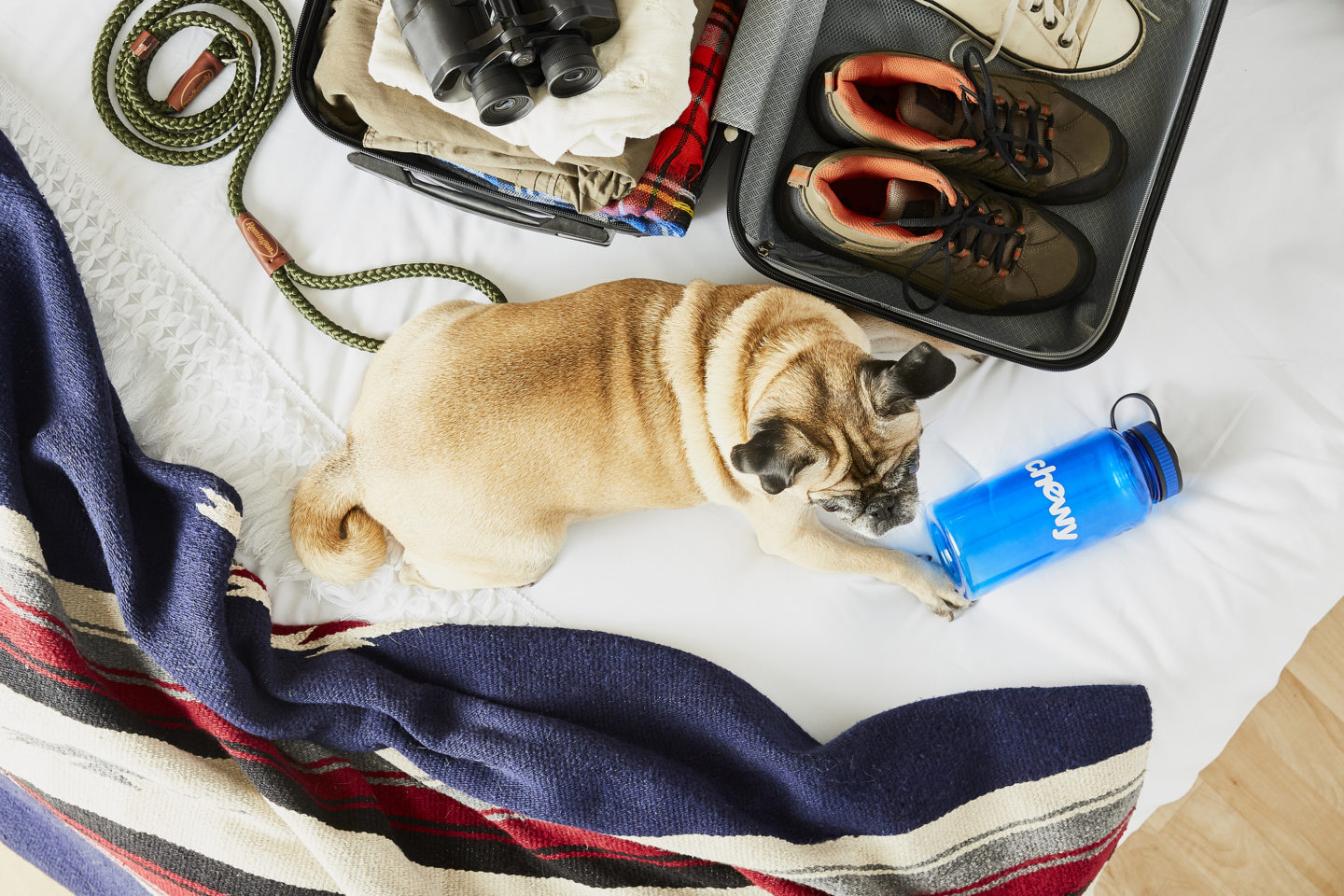
Packing is stressful for everyone, especially if you have to pack for both yourself and your pet. Our must-have items include a dog travel bowl, dog treats, plastic bags, and a favorite dog toy or blanket to keep your pup company.
We recommend bringing along proper ID for your pup as well. Sometimes accidents happen and if you lose track of your pet, you want to make sure they are properly identifiable. Ensure your dog has proper ID tags and is microchipped. Better yet, always keep them nearby with a dog leash.
Be careful to never leave your dog in a car during extreme heat or cold and keep an eye on how they’re doing throughout the stress of the travel process.
Don’t forget the delight of travel. Pack treats for you, and treats for them. Be sure to reward your pup when they have good behavior. It helps reinforce what they are doing right.
Most importantly, remember that no one knows your dog better than you do. Listen to yourself and your pup and enjoy escaping together.
Find more of our favorite pup-related tips from our friends at Chewy by visiting Pet Central.
Good things happen in the great outdoors, especially with those who matter most. To celebrate Summer’s imminent arrival, we invited eight families to Getaway Lake Hartwell, outside Atlanta, to immerse themselves in nature and connect on a deeper level. We spent 36 hours in nature together, taking family portraits, doing yoga, creating vision boards, hiking at Stumphouse Park, and indulging in snacks, lemonade from Jase’s Lemonade Stand, and s’mores around the campfire.
During this special weekend, it was heartwarming to see families bonding over shared activities and creating lasting memories in the serene surroundings. From the peaceful afternoon yoga sessions with Mimi’s Yoga Kids to the laughter-filled evenings around the campfire, every moment was a testament to the power of time off in nature to strengthen our relationships.
Spending time in nature has numerous benefits, especially for children. It encourages creativity, reduces stress, and fosters a sense of wonder and curiosity. As these families explored the trails and participated in activities, we witnessed children discovering the joy of the outdoors, building resilience, and developing a deeper appreciation for the natural world. These experiences are invaluable, laying the foundation for a lifelong love of nature and the outdoors.
We are so glad these families could carve out the time to escape and reconnect. In our fast-paced, technology-driven world, it’s essential to take a step back and enjoy the simple pleasures of nature. By offering these opportunities, we hope to inspire more families to prioritize quality time together and embrace the beauty of the great outdoors. Thank you to everyone who joined us for this unforgettable weekend at Getaway Lake Hartwell.
Need some time to reconnect with your own family in nature? Book your Getaway today.
Now that it’s finally warm out, we know that the best way to complement your outdoor adventure is with a quick dip in cool waters. That’s why we’ve put together a list of our favorite watering holes near each of our Outposts.
Getaway Eastern Catskills One of the most popular waterfalls in the Catskills is Kaaterskill Falls in Hunter, NY. There’s a moderate 2.6 mile out and back trail that will take you to the base of the waterfall for some amazing views.
Getaway Blake Brook Located about an hour away from our Boston Outpost, Lake Winnipesaukee is the largest lake in New Hampshire and offers plenty of activities all year round. Drop by for a swim, a bit of boating, or try your hand at fishing.
Getaway Dale Hollow Our favorite spot near Getaway Dale Hollow for a day on the water, is Pleasant Grove Park, just 24 minutes from our cabins.
Getaway Homochitto Just 11 minutes from the Outpost, you can head to Lake Okhissa for an afternoon fishing or boating on the lake.
Getaway Machimoodus Just 2 minutes from the Outpost, you can head to Salmon Cove Preserve to explore Salmon River, or, just 10 minutes away, you can head to East Haddam Town Beach on the shores of the Machimoodus Reservoir.
Getaway Chattahoochee Vogel State Park, located just 30 minutes from our Outpost, offers far more than just a spot for a quick swim. Explore some nearby hikes or stretch out on the beach. Plus, the mountain views are pretty spectacular.
Getaway Beaver Creek Just a 30 minute drive from our Outpost, Guilford Lake State Park, features a 600-foot public swimming area on the northwest side of the lake.
Getaway Barber Creek Just 20 minutes from the Outpost, you can head to North Beach in nearby South Haven to spend an afternoon swimming and enjoying time on the shores of Lake Michigan.
Getaway Western Catskills Getaway Western Catskills is conveniently located just on the shores of the Pepacton Reservoir, so just two minutes from the Outpost, you can spend an afternoon picnicking with those who matter most. We’d recommend heading to the Shavertown Trail Trailhead for a nice 2.9 mile hike around the reservoir.
Getaway Big Bear With plenty of space for both swimming and water sports, Lake Gregory Regional Park, is a quick 20 minute drive from our Outpost.
Getaway Mount Adams Outlet Falls, located just 10 minutes from our Outpost, features a 69-foot waterfall. If your sense of adventure permits, climb the steep but short path and you’ll find plenty of swimming spots at the base.
Getaway Skagit Valley While our Seattle Outpost has a small waterfall on site, the best spot to spend an afternoon cooling off with those who matter most is 28 minutes away on the shores of the Skagit Bay. And for those with a furry friend, we’d recommend English Boom Trail County Park, as there’s an off-leash dog park there for your pup to run free.
Getaway Kettle River Just 11 minutes from the cabins, you can head to Sturgeon Lake for a day spent cooling off.
Getaway Shenandoah Just one hour away from our Outpost, Upper Whiteoak Falls has a series of swimming holes and hikes easily accessible from the base.
Getaway Piney Woods Fairfield Lake State Park is just over an hour from Getaway Piney Woods. This spot is ideal for a nice dip on a hot day, a lakeside picnic, or some time practicing your fishing skills.
Getaway Brazos Valley Just forty-five minutes from our Outpost, you’ll find Gibbons Creek Reservoir. The reservoir has a few designated swimming areas for you to get out of the heat.
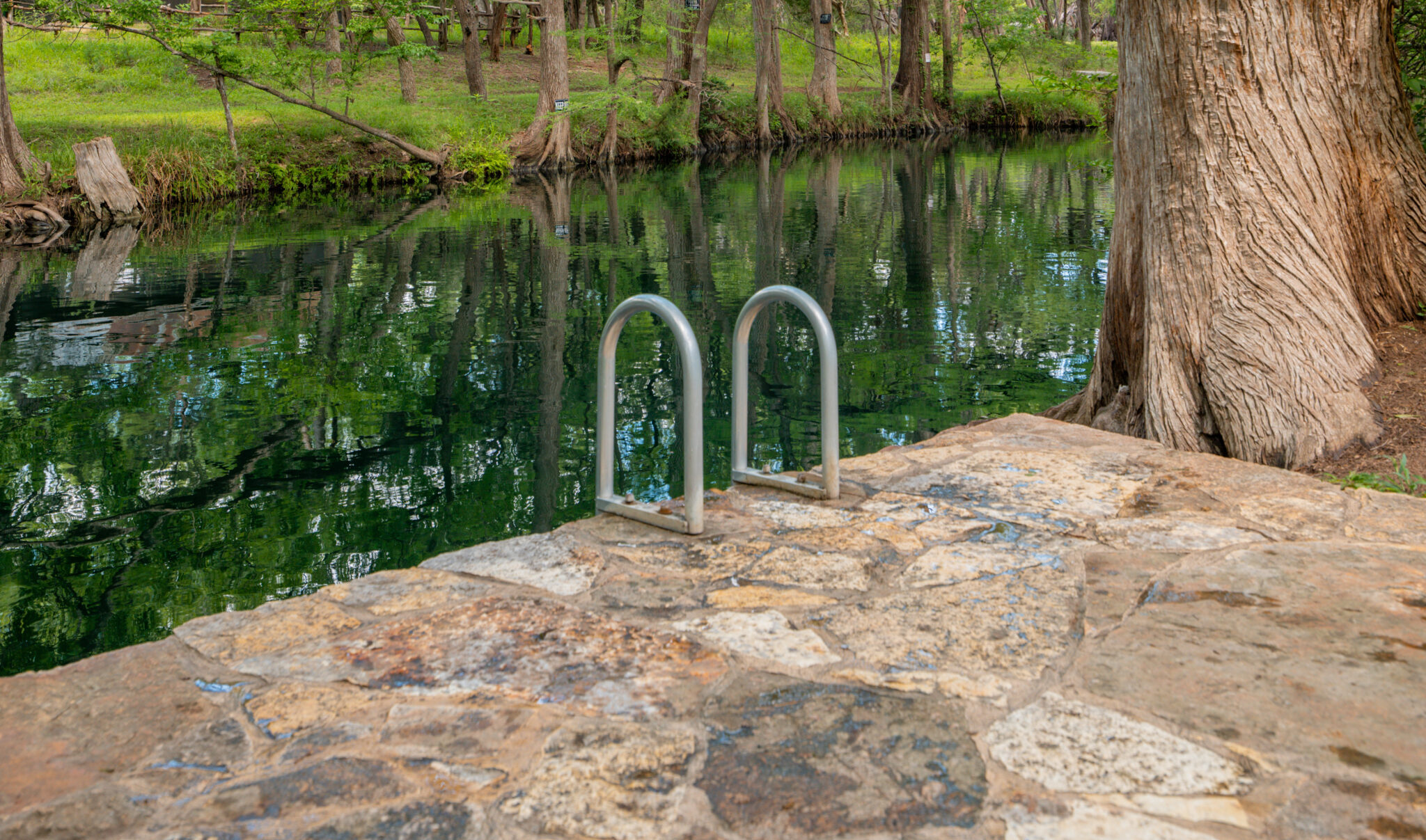
Getaway Hill Country Twenty minutes from Getaway Hill Country, you can find Blue Hole Regional Park. This park features natural turquoise swimming holes, hiking trails, swimming pools, tennis courts, and more.
Getaway Asheboro Just under twenty minutes from the Outpost, Lake Lucas is the perfect spot for a swim, a short hike, or a day of fishing.
Ready to take a dip on your next Getaway. Book your escape now.
In the Fall, we hosted composer, Bradley Thomas Turner at Getaway Talladega Valley through our Artist Fellowship program, so he could escape the noise of the city and reconnect to nature and his love of songwriting. During his stay he created a song and a beautiful video to capture it—check that out below along with our interview with him to hear more about his creative practice and his connection to nature.
Fill us in on your background—personally and in your creative practice.
I’m a composer who gets excited talking about classic film scores, the importance of sound, and the irreplicable beauty of physical, hand-played instruments. I spend a lot of time writing, recording and thinking about music.
How does your connection to nature influence you personally, and how does it influence your art?
Being in nature gives me a new perspective on sound. Everyday where I live, I’m subjected to a multitude of man-made noises that I have no control over (e.g. passing cars or construction sounds). They create such a roar that, most of the time, my brain filters them out. They still affect me though. I end up (somewhat unconsciously) coping by generating my own noise with distractions like the television or my phone, often directly into my ears via Airpods. When I’m in nature, there’s a drastic reduction in volume level that allows me to hear things that would otherwise be drowned out by mechanical noise. Hearing animals or the specific way wind interacts with the unique environment around me starts to feel so much more magical and meaningful than the act of sticking digital recreations of sounds directly in my ears with headphones. It reignites my obsession with the physical phenomenon of sound.
How was your Getaway? Did your free time in your cabin influence your process or inspire any new ideas?
I’m always inspired by traveling to and sleeping in a new place, especially one that’s well-designed and aesthetically pleasing. I end up feeling like I’m in a movie. That combined with the opportunity to be disconnected from the internet made my Getaway a perfect environment for coming up with new ideas. My stay inspired the music I made and the video I shot while there. Making music when I travel feels a bit like keeping a diary. I love being able to record something right there in the space I’m visiting.
As Mother’s Day approaches, it’s time to celebrate the incredible women in our lives who nurture, support, and inspire us every day. Instead of the usual flowers or chocolates, why not give Mom an experience she’ll never forget? At Getaway, we believe in the power of nature to rejuvenate the soul and create lasting memories. Here are six unique Mother’s Day gift ideas, with a Getaway to one of our tiny cabins as the perfect way to show your appreciation:
Personalized Jewelry
Consider gifting your mom a piece of jewelry customized with her initials, birthstone, or a special message. Whether it’s a necklace, bracelet, or ring, personalized jewelry adds a sentimental touch and shows her how much you cherish her.
A Spa Day
Treat your mom to a day of pampering and relaxation at a local spa. Gift her a package that includes a massage, facial, manicure, or pedicure, allowing her to indulge in some much-deserved self-care and unwind from the stresses of daily life.
Handwritten Letter
Express your love and appreciation for your mom with a heartfelt handwritten letter. Share your favorite memories together, express gratitude for her guidance and support, and let her know how much she means to you. It’s a timeless gift that she can treasure forever.
Cooking Class or Culinary Experience
If your mom enjoys cooking or trying new foods, consider booking a cooking class or a culinary experience for her. Whether it’s learning how to make a new cuisine, attending a wine tasting event, or exploring a local food market, it’s a fun and memorable way to spend time together and create new culinary traditions.
An Escape to Nature
Plan a getaway for your mom to escape to nature and recharge. Whether it’s a weekend retreat to a cozy cabin in the woods, a beachside vacation, or a hiking adventure in the mountains, spending quality time in nature can be rejuvenating and refreshing for the soul. Choose a destination that aligns with her interests and preferences, allowing her to relax and unwind surrounded by natural beauty.
No matter which gift idea you choose, a Getaway to one of our tiny cabins promises to be a memorable experience that Mom will cherish forever. Give her the gift of relaxation, adventure, and connection with nature this Mother’s Day.
We’re all too familiar with a sleep-deprived weekday. Whether we’ve stayed up late to hit a deadline, spent the evening out with friends, or binged on the latest Netflix show, the next morning’s alarm is often our worst enemy.
The idea of waking up at our leisure can often help drive us through the week. But does sleeping in and those extra hours of shut-eye actually help us manage the damage done by skipping out on shut-eye? New research suggests that we’re in luck.
One third of Americans don’t get enough sleep (less than seven hours per night). This not only makes us yawn our way through the day, but also leads to a slew of health problems. Yet, a study published in the Journal of Sleep has some good news for those of us who rely on quiet weekend mornings to catch up on some z’s.
To learn more about how sleep habits affect mortality rate, Psychologist Torbjörn Åkerstedt, director of the Stress Research Institute at Stockholm University, and his team tracked almost 44,000 people over the course of 13 years.
The results show that if we sleep for five hours or less on weekdays, hiding under our comforter for eight or more hours on the weekend can make up for it.
The results show that if we sleep for five hours or less on weekdays, hiding under our comforter for eight or more hours on the weekend can make up for it. The people who were sleep deprived during the week, but had a lie-in on the weekend, had the same mortality rate as those who consistently slept for seven hours every night (life goals).
While Åkerstedt does warn that this is a tentative conclusion, you can rest assured that going to bed with no alarm set on a Friday night is going to do you good. Don’t stress about messing up your sleep cycle or missing out on some peaceful weekend waking hours—there’s a reason your eyes want to stay closed when the sun comes up.
Try to treat sleep as active time: it’s needed for a longer, healthier life. Give your body and mind the rest it wants— and stop feeling guilty for rolling out of bed and straight into Sunday afternoon. If you’re looking for a quiet, serene place to squeeze in those extra hours, we know just the spot.
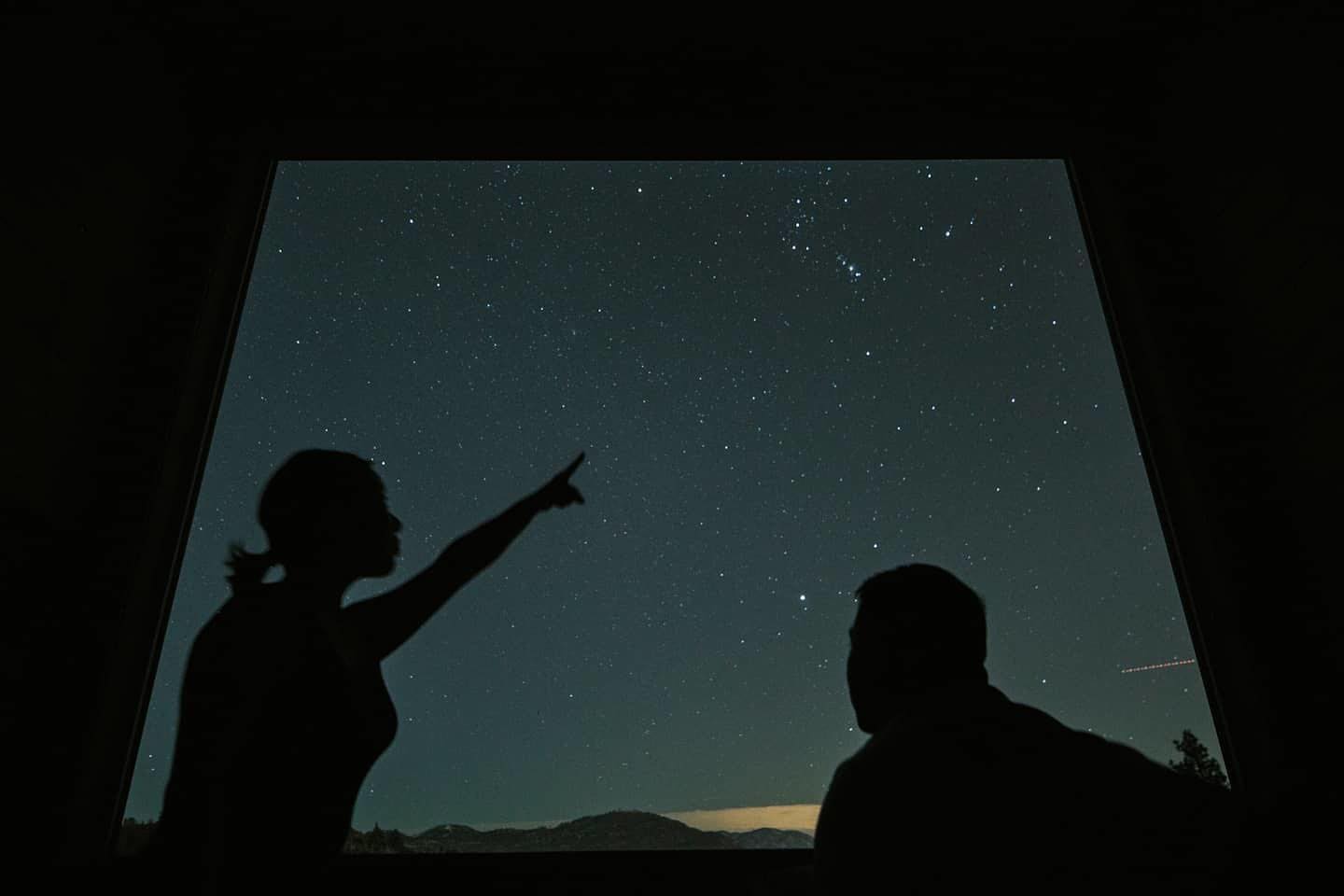
One consistent piece of feedback we receive from our guests is that our cabins are the perfect place, far from the light pollution of the city, to see the stars and constellations. Here’s what you can look forward to seeing in the sky this month on your next escape to nature.
December
Jupiter at Opposition
On December 7th, Jupiter reaches Opposition, marking its closest approach to Earth this year. Fully illuminated by the Sun, the gas giant will be brighter than at any other time, making it visible all night long. This is the best opportunity to view and photograph Jupiter and its moons. A medium-sized telescope will reveal details in Jupiter’s cloud bands, while a good pair of binoculars will allow you to see the four largest moons, appearing as bright dots on either side of the planet. This event is a must-see for both amateur astronomers and seasoned stargazers, offering stunning views of our solar system’s largest planet.
Geminids Meteor Shower
The Geminids meteor shower, peaking on the night of December 13th and the early morning of December 14th, is often considered the best meteor shower of the year. Producing up to 120 multicolored meteors per hour, the Geminids are created by debris from the asteroid 3200 Phaethon, discovered in 1982. This year, a nearly full moon on December 15th will block many of the fainter meteors, but some of the brightest ones should still be visible. The best viewing will be from a dark location after midnight. Meteors will radiate from the constellation Gemini but can appear anywhere in the sky, making it an exciting event for skywatchers willing to brave the chilly December night.
December Solstice
The December Solstice occurs at 09:17 UTC on December 21st, marking an important shift in the Earth’s annual orbit. On this day, the South Pole will be tilted toward the Sun, bringing the Sun to its southernmost position in the sky, directly over the Tropic of Capricorn. For the Northern Hemisphere, this is the first day of winter (Winter Solstice), marking the shortest day and longest night of the year. In the Southern Hemisphere, it is the first day of summer (Summer Solstice), the longest day and shortest night of the year. This solstice invites reflection on the changing seasons and offers a chance to observe the sky’s transition as the Earth’s tilt influences daylight hours.
Ursids Meteor Shower
The Ursids meteor shower peaks on the night of December 21st and the early morning of December 22nd. This minor shower produces 5-10 meteors per hour, originating from dust grains left behind by comet Tuttle, discovered in 1790. The waning gibbous moon will likely block many of the fainter meteors this year, but patient observers may still catch some of the brighter meteors. For the best experience, head to a dark location just after midnight. The meteors will radiate from the constellation Ursa Minor but can appear anywhere in the sky, offering a quieter but still beautiful celestial display during the holiday season.
Mercury at Greatest Western Elongation
On December 25th, Mercury will reach its Greatest Western Elongation, at 22 degrees from the Sun. This event provides the best chance to see Mercury, as it will be at its highest point above the horizon in the morning sky. Look for the elusive planet low in the eastern sky just before sunrise. This rare sighting offers a beautiful way to start the day on Christmas morning, as Mercury shines brightly in the dawn light, visible even to those without telescopes or binoculars.
default
November
New Moon November 1 brings the New Moon at 12:49 UTC. With the Moon tucked between Earth and the Sun, the night sky will be especially dark, making it an ideal time to see fainter celestial objects like star clusters and distant galaxies. Whether you’re using a telescope, binoculars or just your eyes, the New Moon sets the stage for some deep space exploration.
Taurids Meteor Shower The Taurids peak on November 4-5, showcasing slower meteors that can be surprisingly bright. While it’s a smaller meteor shower with about 5-10 meteors per hour, the Taurids have a unique charm with two streams from asteroid 2004 TG10 and comet 2P Encke. A first quarter moon might block out fainter meteors, but if you’re in a dark spot after midnight, you could still catch some bright ones coming from the Taurus constellation.
Full Supermoon On November 15, the Full Moon shines at 21:30 UTC, known as the Beaver Moon. This moon is also the last Supermoon of 2024, appearing a bit bigger and brighter than usual because it’s closer to Earth. It’s perfect for a moonlit walk or capturing some night photography.
Mercury at Greatest Eastern Elongation On November 16, Mercury reaches its Greatest Eastern Elongation, the best time to spot it. Look low in the western sky just after sunset for a rare view of this elusive planet shining bright in the twilight.
Uranus at Opposition November 17 brings Uranus to its closest approach to Earth, fully lit up by the Sun. While it’ll look like a tiny blue-green dot, Uranus will be visible all night, making it a cool target for those who want a glimpse of the outer planets.
Leonids Meteor Shower The Leonids, peaking on November 17-18, can produce up to 15 meteors per hour this year. Though a nearly full moon might wash out some of the show, you could still catch some bright streaks if you’re patient and in a dark location. The meteors will appear to radiate from Leo, adding a bit of excitement to the night sky.
October
New Moon October 2 marks the New Moon at 18:51 UTC, giving stargazers a clear sky for spotting faint objects like galaxies and nebulae. With no moonlight, it’s an ideal night for stargazing, even with just your eyes.
Draconids Meteor Shower The Draconids peak on October 7 and are best viewed in the early evening. While it’s a smaller shower with around 10 meteors per hour, this year’s second-quarter moon could mean darker skies and a nice display. Head out early and keep an eye on Draco for those meteors.
Full Supermoon On October 17, the Full Moon, or Hunter’s Moon, will be at 11:28 UTC. It’s a Supermoon, making it look a bit larger and brighter. It’s a great chance to enjoy the moonlight on an autumn evening.
Orionids Meteor Shower The Orionids peak on October 21-22, with up to 20 meteors per hour. These meteors come from Halley’s Comet, so you’re seeing bits of a legendary comet streaking across the sky. Though a waning gibbous moon may block fainter ones, you might still catch a few bright meteors after midnight.
September
New Moon September 3 offers another New Moon, creating the month’s darkest skies. It’s perfect for a night of stargazing and discovering some hidden gems in the night sky.
Mercury at Greatest Western Elongation On September 5, Mercury is at its highest above the horizon before sunrise. If you’re up early, look for it low in the eastern sky.
Saturn at Opposition September 8 is the best time to catch Saturn and its rings. Saturn will be fully illuminated and visible all night, making it a must-see for anyone with a telescope.
Full Supermoon On September 18, the Corn Moon will glow, marking the first of three Supermoons in 2024. It’s a stunning time to enjoy a full moon’s beauty.
Partial Lunar Eclipse On the same night as the Supermoon, there will be a Partial Lunar Eclipse. Part of the Moon will pass through Earth’s shadow, adding a little extra excitement to your night.
Neptune at Opposition September 20 is Neptune’s time to shine, offering the best view of this blue giant planet. Though it’s tiny through a telescope, Neptune’s unique color makes it a lovely sight.
Fall Equinox On September 22, day and night are nearly equal in length, marking the start of fall in the Northern Hemisphere. It’s a perfect night to enjoy the changing season and observe the constellations shifting.
August
New Moon August 4 brings the New Moon at 11:15 UTC. With the Moon nestled between Earth and the Sun, it won’t be visible, giving us super-dark skies. It’s the perfect time to spot faint objects like star clusters and distant galaxies. Whether you have a telescope, binoculars or just your eyes, this is an ideal night for exploring deep space.
Perseids Meteor Shower The Perseids, one of the most awaited meteor showers, will peak on the night of August 12 and early morning of August 13. Known for producing up to 60 meteors per hour, these bright streaks come from comet Swift-Tuttle. Although a first quarter moon might block some fainter meteors early on, the moon will set after midnight, leaving you with dark skies for a great show. For the best view, find a dark spot and look up after midnight. Meteors will radiate from Perseus but can appear anywhere in the sky.Full Moon On August 19 at 18:27 UTC, we’ll see a Full Moon, also known as a Blue Moon. This Sturgeon Moon was named by Native American tribes for the time when sturgeon were easier to catch in the Great Lakes. It’s also called the Green Corn Moon or Grain Moon. This rare Blue Moon is the third of four full moons this season, a once-in-a-blue-moon event that happens every few years. Usually, there are three full moons per season, but occasionally there’s an extra one, which we call the Blue Moon.
July
New Moon July 5 brings another New Moon, making it the darkest night of the month. With no moonlight, it’s an ideal time to look for faint celestial sights like galaxies and star clusters. Grab a telescope or binoculars or just enjoy the view with your eyes.
Full Moon On July 21 at 23:33 UTC, the Buck Moon will brighten the sky. This full moon, named for the time of year when young deer grow their new antlers, is also called the Thunder Moon or Hay Moon. It’s a great time to take in the Moon’s surface details and enjoy the summer nights.
Mercury at Greatest Eastern Elongation July 22 is a great chance to spot Mercury, which will be high in the evening sky. Look for it just after sunset low in the western sky. Mercury is often lost in the Sun’s glare, but during this elongation, it’s easier to spot in the twilight.
Delta Aquarids Meteor Shower The Delta Aquarids peak on the night of July 28 and early morning of July 29. This shower produces up to 20 meteors per hour and comes from debris left by comets Marsden and Kracht. With the waning crescent moon, skies will be darker, so you’ll have a better view of the meteors.
June
New Moon June 6 brings a New Moon, giving us a dark sky and the perfect conditions for stargazing. Without moonlight, you’ll get a clear view of faint celestial objects like galaxies and nebulae.
Summer Solstice On June 20, we’ll experience the longest day of the year. The Summer Solstice marks the start of summer and is a great time to enjoy the extended twilight and warm evening skies.
Full Moon June 21 is the Strawberry Moon, named for the strawberry harvest. This full moon lights up the summer night and offers a great chance to observe its craters, valleys and mountains.Bootid Meteor Shower The Bootids peak on June 27, bringing slow-moving meteors across the sky. Look for them after midnight, and enjoy the graceful streaks from the constellation Bootes.
May
Eta Aquarids Meteor Shower On the night of May 6 and morning of May 7, you can catch the Eta Aquarids, an above-average shower with up to 60 meteors per hour. Look for them after midnight for the best view.
New Moon May 8 offers a dark sky with the New Moon, making it an ideal time to spot faint objects in space like galaxies and star clusters.
Mercury at Greatest Western Elongation On May 9, look to the eastern sky just before sunrise to spot Mercury at its highest point above the horizon. It’s a rare chance to see this planet in the morning sky.
Full Flower Moon The Full Moon on May 23 is the Flower Moon, a beautiful sight that marks the bloom of spring flowers. Enjoy the glow and take in the beauty of the night sky.
April 8 brings a New Moon and a total solar eclipse, where the Moon passes between Earth and the Sun, leaving the sky completely dark. This eclipse will trace a narrow path across 13 states, offering a rare chance to witness it in nature. Starting in Mexico, it moves into the U.S. through Texas, continuing through Oklahoma, Arkansas, Missouri, Illinois, Kentucky, Indiana, Ohio, Pennsylvania, New York, Vermont, New Hampshire, and ending in Maine. It’s a breathtaking opportunity to soak in a truly unique celestial show.
Lyrids Meteor Shower The Lyrids meteor shower peaks on April 22-23, putting on a show with about 20 meteors per hour. These meteors come from dust left behind by comet C/1861 G1 Thatcher. The shower radiates from the constellation Lyra, so grab a blanket, head to a dark spot, and keep an eye out for those bright streaks lighting up the sky.
Full Moon On April 23, the Full Moon—known as the Pink Moon—will light up the night sky. Named after the early spring blooms of moss pink, this Moon adds a lovely touch to the season. Though it might wash out some fainter celestial sights, it’s perfect for a night of lunar observation and admiring its detailed craters and surface features.
March
New Moon March 10 brings the New Moon, offering super dark skies that are perfect for stargazing. With no moonlight, it’s an ideal time to explore the night sky and catch sight of those fainter celestial objects.
March Equinox The March Equinox on March 20 marks the start of spring in the Northern Hemisphere, bringing nearly equal parts of day and night. It’s a time of transition, and you’ll start to see spring constellations rising, making it a great time for stargazing.
Mercury at Greatest Eastern Elongation On March 24, Mercury reaches its Greatest Eastern Elongation. This is one of the best times to catch a glimpse of Mercury, shining bright in the evening sky just after sunset. Look low in the western sky to spot it, and enjoy the rare view of this elusive planet.
Full Moon (Worm Moon) The March 25 Full Moon, known as the Worm Moon, marks the time when the ground starts to thaw and earthworms reappear. Also called the Crow Moon, Crust Moon, and Sap Moon, it’s a great opportunity to take in the Moon’s brilliant face and enjoy its natural beauty.
Penumbral Lunar Eclipse Later on March 25, a Penumbral Lunar Eclipse will take place as the Moon passes through Earth’s partial shadow. While it’s more subtle than a total eclipse, it adds an intriguing touch to the night as part of the Moon gradually darkens. It’ll be visible across much of North and South America, so find a spot to enjoy this event.
February
Comet C/2022 E3 at its Brightest On February 1, keep an eye out for Comet C/2022 E3. This bright visitor is easy to spot with its glowing coma and tail, making it a spectacular sight against a dark sky.
Peak of the α-Centaurid Meteor Shower February 8 is the peak of the α-Centaurid meteor shower, known for fast, bright meteors that sometimes produce fireballs. Look to Centaurus for an exciting night of shooting stars.
New Moon February 9 brings another New Moon, giving you dark skies perfect for stargazing. It’s a great time to see stars and other celestial objects that might be washed out with more moonlight.
Full Moon On February 24, the Full Moon will brighten the night sky. Though it may block out some fainter stars, it’s an ideal time to observe lunar details like craters and mountains with binoculars or a telescope.
January 2024
Quadrantids Meteor Shower From January 3-4, the Quadrantids Meteor Shower peaks, offering up to 40 meteors per hour. Grab a cozy spot and look to Bootes for a great show.
New Moon Book your cabin stay for January 11 to enjoy a dark sky with the New Moon, perfect for spotting faint galaxies and star clusters.
Mercury at Greatest Western Elongation On January 12, you’ll have a chance to catch Mercury in the morning sky, shining bright just before sunrise. Look low in the eastern sky for the best view.
Full Moon Stay on January 25 to enjoy the bright, beautiful Full Moon, a great way to wrap up a cozy winter night.